High Voltage Lithium Battery: Powering Modern Energy Storage Systems
What is a high-voltage lithium battery?
A high-voltage lithium battery refers to a lithium-ion battery system that operates at a significantly higher voltage than traditional battery systems. Most conventional batteries operate between 12V and 48V, while high voltage systems typically operate between 200V and 800V.
Higher voltage allows the system to deliver the same power while using lower current. Consequently, energy loss decreases, and system efficiency improves.
Most modern systems use LiFePO4 (Lithium Iron Phosphate) chemistry because it offers excellent safety, long cycle life, and strong thermal stability.
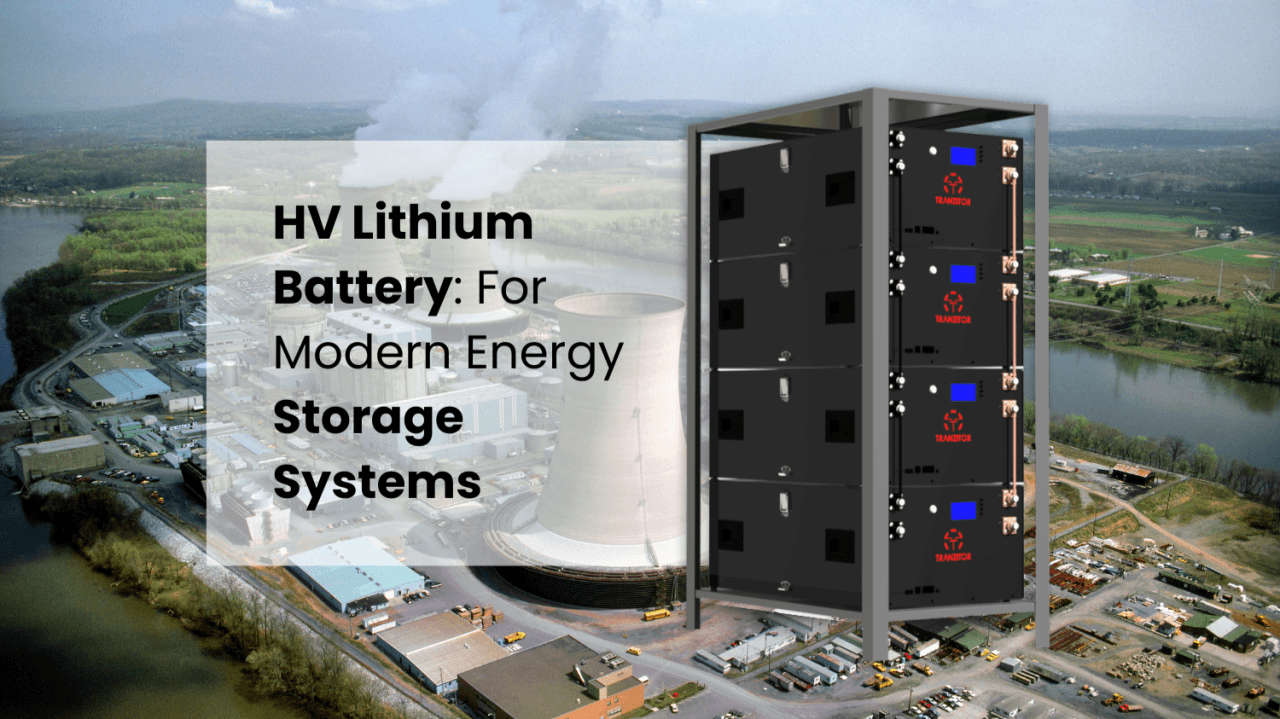
These batteries often appear in LiFePO4 battery rack configurations or modular designs. Such architecture enables easy expansion and better system management.
Why High Voltage Systems Improve Efficiency?
Voltage plays a major role in electrical efficiency. When the voltage increases, the current decreases for the same power output. This relationship reduces energy loss across cables and power electronics. Therefore, high-voltage lithium battery systems provide several operational advantages.
- Reduced Energy Loss - Lower current significantly reduces heat generation and power loss. As a result, systems operate more efficiently.
- Smaller System Components - Lower current requirements allow engineers to use thinner cables and smaller power electronics. Consequently, installation costs and infrastructure complexity decrease.
- Improved System Stability - High-voltage systems support stable power delivery for large energy loads. This stability becomes critical for grid-scale ESS projects and industrial operations.
Modular Design Enables Scalable Energy Storage:
Modern modular lithium battery systems allow businesses to expand their energy storage capacity as their power needs grow.
Instead of replacing the entire battery infrastructure, operators simply add additional modules to an existing system. This design offers several advantages:
- Flexible capacity expansion
- Simplified Maintenance
- Reduced Downtime
- Improved System Reliability
Many advanced solutions integrate these modules into high-voltage ESS cabinets, which combine batteries, battery management systems, and protection components into a single enclosure.
Companies such as Tranzitor design modular high-voltage battery systems specifically for scalable energy storage environments.
Applications of High Voltage Lithium Battery Systems:
High voltage lithium battery technology supports several critical applications across industries.
- Energy Storage Systems (BESS) - Battery Energy Storage Systems store surplus renewable energy and release power when demand rises. This capability improves grid stability and supports renewable energy integration.
- Industrial Power Backup - Manufacturing facilities and data centres require uninterrupted power. A high-voltage lithium battery system delivers reliable backup power while maintaining high efficiency.
- Telecom Infrastructure - Telecommunication networks rely on continuous energy availability. High-voltage lithium batteries provide dependable backup power for base stations and communication towers.
- Commercial Energy Management - Commercial buildings use energy storage to manage peak demand and reduce electricity costs. High-voltage lithium battery systems allow businesses to optimise energy consumption and improve operational efficiency.
Safety and Battery Management Systems:
Safety remains a top priority in high-voltage battery systems. Therefore, modern systems include advanced Battery Management Systems (BMS). A BMS continuously monitors several parameters, including:
- Cell voltage
- Temperature
- Charging and discharging cycles
- System health
If abnormal conditions occur, the system automatically adjusts performance or shuts down to prevent damage.
Leading lithium battery manufacturers, including Tranzitor, integrate intelligent BMS technology to ensure safe and reliable battery operation.
Why Businesses Are Adopting High-Voltage Lithium Batteries?
The transition toward high-voltage lithium battery technology continues to accelerate across industries. Several factors drive this shift.
- First, these batteries deliver higher efficiency and improved performance compared to traditional battery technologies.
- Second, they support large-scale energy storage applications, which are essential for renewable energy integration.
- Third, modular architecture enables businesses to scale energy storage without major infrastructure upgrades.
Finally, the long lifespan of LiFePO4 batteries reduces replacement frequency and lowers long-term operating costs.
Conclusion
The high-voltage lithium battery has become a cornerstone of modern energy storage systems. Its ability to deliver efficient power, scalable storage capacity, and improved system reliability makes it essential for industries that depend on uninterrupted energy.
As global energy systems continue to evolve, companies like Tranzitor are contributing to the development of advanced lithium battery technologies that support efficient and sustainable energy solutions.
With this multi-pronged approach, we’re not just building batteries - we’re protecting communities, inspiring trust, and powering a sustainable tomorrow.