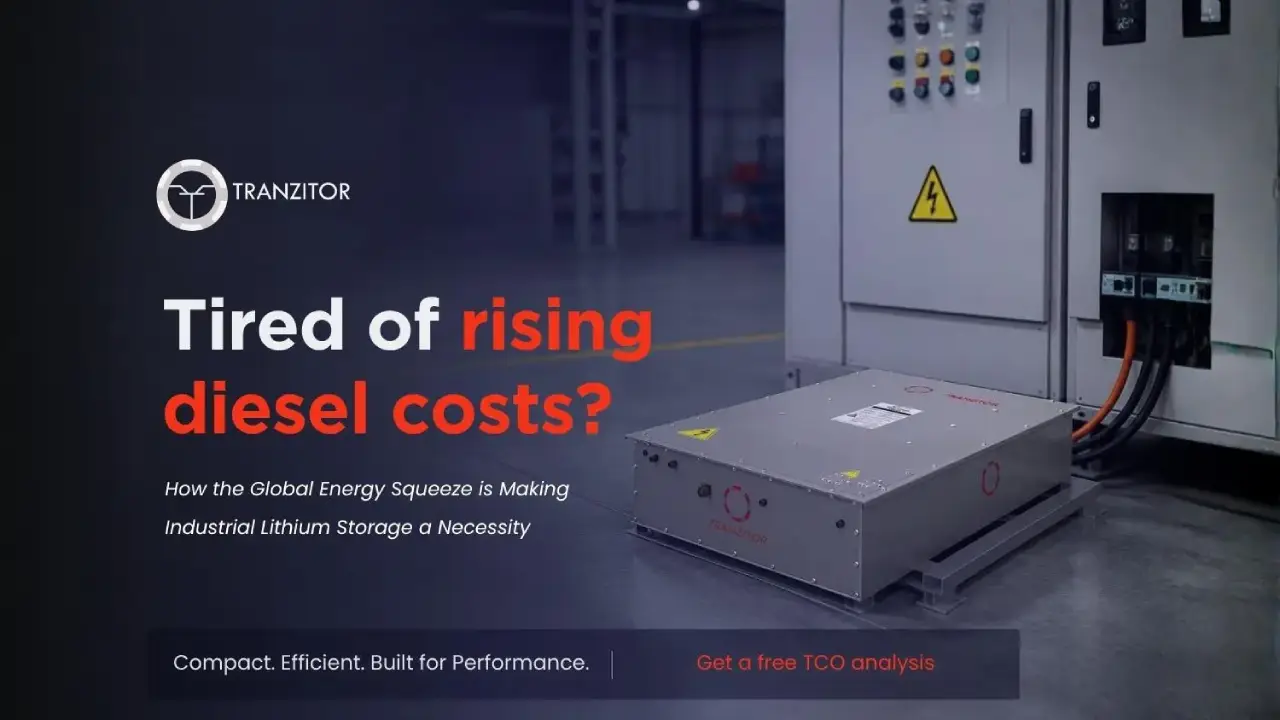
Tired of Rising Diesel Costs? How the Global Energy Squeeze is Making Industrial Lithium Storage a Necessity
The Global Spark: How the Situation in Iran Hits Your Local Factory Bill
To understand why your weekly operating costs are creeping up, we have to look at the global energy map. The ongoing military and diplomatic conflict involving Iran has triggered what experts are calling one of the most significant energy supply challenges in recent history.
Because of the severe naval restrictions and disruptions around the Strait of Hormuz—a narrow shipping lane through which nearly 20% of the world’s petroleum liquids pass—global oil supplies have dramatically tightened. As of mid-May 2026, global benchmark Brent Crude prices are aggressively climbing toward $110 per barrel, with refined products like diesel and kerosene facing an even tighter squeeze.
India imports more than 80% of its crude oil, making our domestic market incredibly sensitive to these Middle Eastern supply shocks. Wholesale inflation in India has jumped, and retail fuel prices have been raised to keep up with international pressure. For a local factory manager or warehouse operator, this isn’t just international news; it is a direct line item on your monthly expense sheet. Every time you turn on a diesel generator, you are burning fuel that is priced at a premium due to a global crisis.
The True Financial Drain of Burning Diesel
Let’s look at the hard numbers. Have you ever calculated exactly how much it costs to generate just one single unit (kWh) of electricity using a diesel generator?
A typical industrial generator is not an efficient machine. When you add up the price of fuel, regular engine oil changes, filter updates, transport logistics, and general mechanical upkeep, producing one unit of power from a generator can easily cost between ₹25 and ₹45.
Now, compare that to normal grid power, which usually costs around ₹8 to ₹10 per unit. Or better yet, compare it to rooftop solar power, which costs virtually ₹0 once the panels are installed. Every single time your factory switches over to a diesel generator during an outage or a voltage drop, you are paying up to four times more for your electricity. If your industrial area experiences even a few hours of power fluctuations or scheduled cuts every week, those extra charges add up to lakhs of rupees by the end of the year.
What is a Lithium BESS, and How Does It Stop the Bleeding?
If you want to escape the trap of volatile, crisis-driven fuel prices, you need to change how you store your backup power. This is where a Lithium Battery Energy Storage System (BESS) comes in.
To put it in completely simple terms, a lithium BESS is like a giant, super-sized version of the clean, rechargeable battery inside your smartphone. However, instead of using the materials found in small consumer electronics, these industrial-grade systems are built using LiFePO4 (Lithium Iron Phosphate) technology. This specific type of lithium chemistry is engineered to be incredibly safe, structurally stable, and perfect for heavy industrial environments.
Instead of burning precious, expensive fuel to make electricity on demand during a blackout, a lithium system acts like a smart energy bank. It sits quietly in your facility and charges itself up using cheap power from the grid during off-peak hours, or from your rooftop solar panels during the day. When the main power line cuts out, the system instantly opens its gates and releases the stored, low-cost energy back into your factory. No fuel required.
Let’s Do the Math: Diesel vs. Lithium Savings
Let’s look at a realistic scenario for a medium-sized warehouse or factory in India that deals with about 2 hours of power cuts or grid instability per day.
Running a standard 100 kVA diesel generator for just 2 hours a day can burn through thousands of rupees in fuel and maintenance every week. Over a single year, that translates to a staggering ₹7,00,000 to ₹10,00,000 spent purely on running costs.
Now, look at the alternative. In 2026, the price of high-quality lithium battery systems has dropped to a highly accessible range thanks to local manufacturing incentives and advanced technology. To fully charge a 100 kWh Tranzitor lithium battery pack from the grid costs only about ₹800 to ₹1,000. If you link it with solar panels, that cost is basically non-existent.
Because a lithium battery doesn’t need engine oil, filters, spark plugs, or mechanical tune-ups, your maintenance cost drops to zero. Most industrial businesses find that by turning off their diesel generators completely and switching to a lithium LiFePO4 backup, the entire system pays for itself in 24 to 36 months. Once that payback period is over, every single watt of backup power you use is pure savings back into your business.
Hidden Perks: Beyond Just Saving Fuel
While stopping the drain on your fuel budget is the biggest financial win, an upgrade to a Tranzitor lithium system provides several other major operational advantages:
Instant Switchover (Zero Machine Reboots): When the grid fails, a diesel generator takes anywhere from 10 to 30 seconds to crank up, settle its engine speed, and start sending power. In those few seconds, your computers turn off, your CNC machines stop mid-cut, and your digital assembly lines reset. This causes lost production time and broken products. A lithium backup switches over in milliseconds. It is so fast that your machinery and lights won’t even flicker.
Massive Space Savings: Industrial generators are huge, incredibly heavy, and require separate rooms or outdoor concrete slabs with heavy ventilation. A modern lithium LiFePO4 battery pack is highly compact. It takes up 70% less floor space than a generator and its fuel tanks, allowing you to reclaim valuable square footage for actual production or product storage.
Zero Regulatory and Lawsuit Risks: Government regulations on pollution and diesel smoke are tighter than ever. Many manufacturing zones and urban industrial areas are placing strict limits or outright bans on running older diesel generator sets due to noise and air pollution. A lithium battery operates in total, absolute silence and produces zero emissions. It keeps your facility 100% compliant with environmental rules without any risk of fines.
The Tranzitor Advantage: Local, Smart, and Reliable
Transitioning away from fuel dependency shouldn’t be a generic, out-of-the-box process. Every factory uses power differently. Some have heavy starting surges from massive electric motors, while others require steady, uninterrupted current for sensitive electronics.
At Tranzitor, we don’t just sell you a set of batteries. We specialise in custom firmware design and advanced electronics engineering. Every single lithium pack we build features an intelligent BMS (Battery Management System) that is explicitly programmed to handle the high heat (up to 45°C and higher) and specific power conditions of the Indian grid. We make sure your system is optimised to squeeze every single bit of value out of your grid or solar inputs, giving you maximum protection against rising fuel prices.
Take Control of Your Energy Costs Today
High fuel prices don’t have to dictate your facility’s operational expenses. By replacing your loud, costly diesel generator with a silent, ultra-efficient Tranzitor lithium LiFePO4 system, you can lock in predictable, low-cost power backup for the next 10 to 15 years.
Ready to see how fast you can stop paying for diesel? Contact our Team today for a comprehensive, completely free TCO (Total Cost of Ownership) Power Audit. We will study your daily energy patterns, examine your current generator expenses, and design a customised lithium upgrade plan that shows you exactly how much money you will save.
Let’s connect for a free Energy Savings Check.