Top Industrial Lithium Battery Manufacturer in Morbi
Morbi is one of India’s major ceramic manufacturing centres, with a strong concentration of wall tiles, floor tiles, vitrified tiles, sanitaryware, and related industrial businesses. Its manufacturing ecosystem also includes packaging, paper, and other supporting industries.
These businesses depend on machinery, electrical control systems, material handling, and reliable power infrastructure. As a result, their battery requirements can extend beyond conventional inverter backup to include industrial equipment, mobile applications, solar energy storage, and customised battery systems.
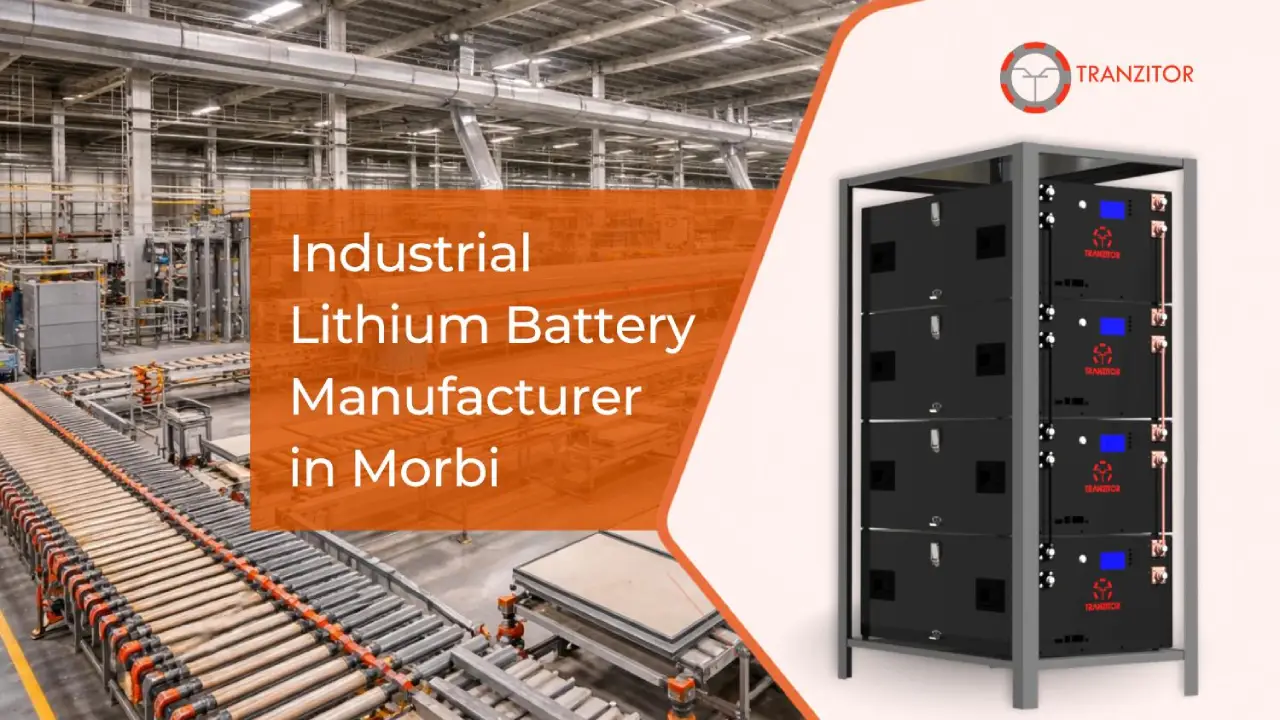
For businesses searching for an Industrial Lithium Battery Manufacturer in Morbi, choosing the right solution starts with understanding the equipment and its operating requirements.
Tranzitor develops lithium battery solutions for industrial, commercial, mobility, backup, renewable energy, and customised applications. Its range supports different voltage and capacity requirements, allowing businesses to evaluate configurations suited to their specific needs.
Lithium Battery Solutions for Morbi's Ceramic Industry
Ceramic manufacturing involves energy-intensive processes, including raw material preparation, pressing, drying, glazing, polishing, and firing. The Bureau of Energy Efficiency identifies energy consumption and production costs as important considerations for the ceramic sector.
However, different processes require different energy solutions. Conventional ceramic kilns commonly use thermal fuels such as natural gas, charcoal, or lignite. A lithium battery should therefore not be presented as a direct replacement for kiln fuel.
Instead, industrial battery systems can serve relevant electrical applications, including control systems, UPS installations, communications, mobile equipment, and appropriately designed backup or energy-storage systems.
For a ceramic manufacturer, the right battery depends on the equipment it needs to support, its power requirements, and how long the system must operate. This application-led approach makes it easier to identify where a lithium battery can deliver practical value.
LiFePO4 Batteries for Reliable Industrial Operation
A LiFePO4 Battery can be suitable for applications that require repeated charging and discharging, dependable performance, and appropriate battery protection.
Tranzitor’s lithium battery range uses LiFePO4 chemistry and incorporates Battery Management System (BMS) protection against overcharge, over-discharge, over-current, and short circuits. The systems also support passive cell balancing and RS485/CAN communication.
These features matter when a battery must work as part of a larger electrical or industrial system. The battery needs to match the equipment’s voltage, capacity, charging characteristics, and operating conditions.
For manufacturers evaluating an industrial lithium battery supplier, chemistry is only one consideration. The complete battery design, protection system, and integration requirements are equally important.
Industrial Power Backup for Factories and Commercial Facilities
Industrial facilities rely on electrical systems for monitoring, automation, communications, control panels, and supporting equipment. An interruption can disrupt these operations even when the primary production machinery does not depend directly on battery power.
A properly designed Power Backup system can help maintain essential electrical loads during an outage. Lithium batteries can support UPS and Inverter systems in factories, offices, commercial facilities, and other installations. They can also support telecom equipment and selected industrial systems where continuity of power matters.
Morbi-focused power-solution listings also highlight industrial UPS, battery backup, and commercial energy storage as relevant local applications.
Before choosing a battery, businesses should calculate the connected load, required backup duration, voltage, and charging requirements. A battery intended for control equipment, for example, will have different requirements from a system supporting larger electrical loads.
Lithium Batteries for Material Handling and Industrial Equipment
Ceramic manufacturing requires the movement of raw materials, finished tiles, packaging, and other goods. Warehouses and production facilities may use forklifts, trolleys, cranes, and other material-handling equipment for these tasks.
Electric industrial mobility creates another potential application for lithium batteries. A Heavy Duty battery configuration may suit equipment with higher power demands or demanding operating cycles, while a Medium Duty solution may be more appropriate for less intensive applications. The actual duty cycle, voltage, capacity, and charging schedule should determine the selection.
Tranzitor’s application range includes forklifts, trolleys, cranes, material-handling equipment, EVs, and specialised industrial machines. Its battery solutions can be evaluated according to the requirements of the specific equipment.
For OEMs and equipment manufacturers, selecting the right lithium battery early in the design process can also simplify integration.
Energy Storage for Solar and Industrial Facilities
Energy use is a major consideration for Morbi’s ceramic businesses. Consequently, solar generation and industrial energy management are relevant parts of the local market. Recent industry resources specifically address solar adoption and energy costs for Morbi’s ceramic sector.
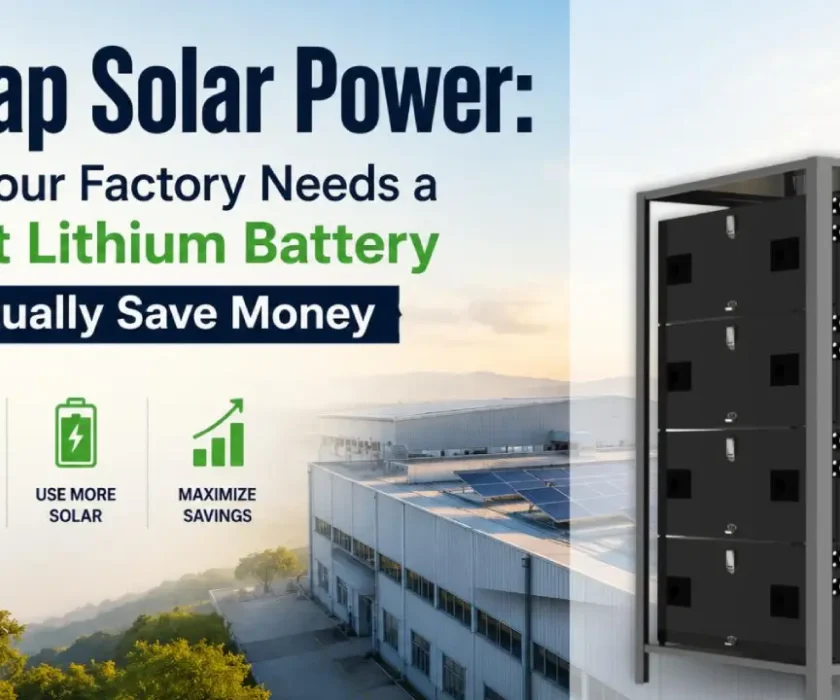
A battery-based Energy Storage system can store electricity generated by solar installations and deliver it when required. Depending on the installation, it may support selected electrical loads, backup requirements, or a broader battery energy storage system (BESS).
The battery must be designed around the intended purpose. A backup system prioritises continuity for specified loads, while an energy-storage installation may also need to account for charging schedules, energy demand, operating cycles, and future expansion.
For Morbi’s industrial businesses, a technical assessment can help determine whether a lithium battery system fits the electrical load and operating economics.
High Voltage and Medium Voltage Battery Systems
Some industrial applications require more than a conventional low-voltage battery. Electric vehicles, industrial mobility equipment, robotics, and larger energy-storage installations may need High Voltage or Medium Voltage battery architectures.
Tranzitor supports applications across EVs, industrial mobility, BESS, microgrids, UPS systems, and other specialised requirements. Its high-voltage range offers customisation from 100V to 1000V DC.
For larger applications, a Stackable battery architecture can help build modular systems around the required voltage and capacity. This can be useful for businesses developing specialised equipment or integrating batteries into larger electrical systems.
The appropriate configuration should always account for the application’s voltage, power demand, BMS requirements, safety measures, and electrical integration.
Custom Lithium-Ion Battery Packs for Industrial Applications
Not every industrial machine can accommodate a standard battery. OEMs may need specific dimensions, connectors, mounting arrangements, voltages, capacities, or communication interfaces.
A customised Lithium-Ion battery pack allows the battery to fit the equipment rather than forcing the equipment to fit a standard battery. Tranzitor supports customised battery configurations for OEM projects, industrial systems, prototypes, research and development, specialised vehicles, and other applications.
This flexibility is relevant to Morbi’s industrial ecosystem, where businesses may need custom power solutions for machinery, material handling, automation, or newly developed equipment.
A manufacturer should evaluate the load profile and design requirements before specifying the final battery configuration.
How to Choose the Right Lithium Battery Manufacturer in Morbi
The best battery solution depends on what the customer needs to power. A ceramic factory’s control system, a forklift, a solar installation, and an OEM machine are different applications and should not receive the same generic recommendation. Before selecting an Industrial Lithium Battery Manufacturer in Morbi, consider:
- Application and load: What equipment will the battery support, and what are its continuous and peak power requirements?
- Voltage and capacity: What electrical specifications does the equipment require?
- Backup or operating duration: How long must the battery supply power?
- Charging requirements: How frequently will the battery charge and discharge?
- Safety and monitoring: Which BMS protection and communication features are necessary?
- Customisation: Does the application require a particular enclosure, connector, or mounting arrangement?
- Scalability: Could voltage or capacity requirements change in the future?
For Morbi’s ceramic manufacturers and associated industrial businesses, selecting a battery around the actual application is more useful than choosing solely by price or nominal capacity.
Tranzitor offers lithium battery solutions for industrial equipment, material handling, power backup, renewable energy, mobility, energy storage, and customised OEM requirements. The aim is to match the battery configuration to the equipment and its intended operating conditions.
FAQ
What lithium battery applications are relevant to Morbi's ceramic industry?
Potential applications include backup for selected electrical loads, UPS systems, control equipment, material handling, solar energy storage, and customised industrial equipment. The suitability of each application depends on its load and operating requirements.
Are LiFePO4 batteries suitable for industrial machinery?
Yes. LiFePO4 batteries can be suitable for industrial applications requiring dependable repeated cycling, provided the battery is correctly designed for the equipment.
Can lithium batteries directly replace the fuel used in ceramic kilns?
Not as a straightforward battery replacement. Conventional ceramic kilns typically rely on thermal fuels. Lithium batteries are more directly applicable to electrical backup, mobile equipment, and appropriately engineered energy-storage applications.
Can lithium battery packs be customised for industrial machinery?
Yes. Battery packs can be designed around the machine’s voltage, capacity, dimensions, connectors, communication requirements, and installation constraints.
Can lithium batteries be used with solar systems in Morbi?
Yes. Lithium batteries can support solar energy storage and selected backup applications. The appropriate system depends on solar generation, electrical loads, storage duration, and the intended operating strategy.