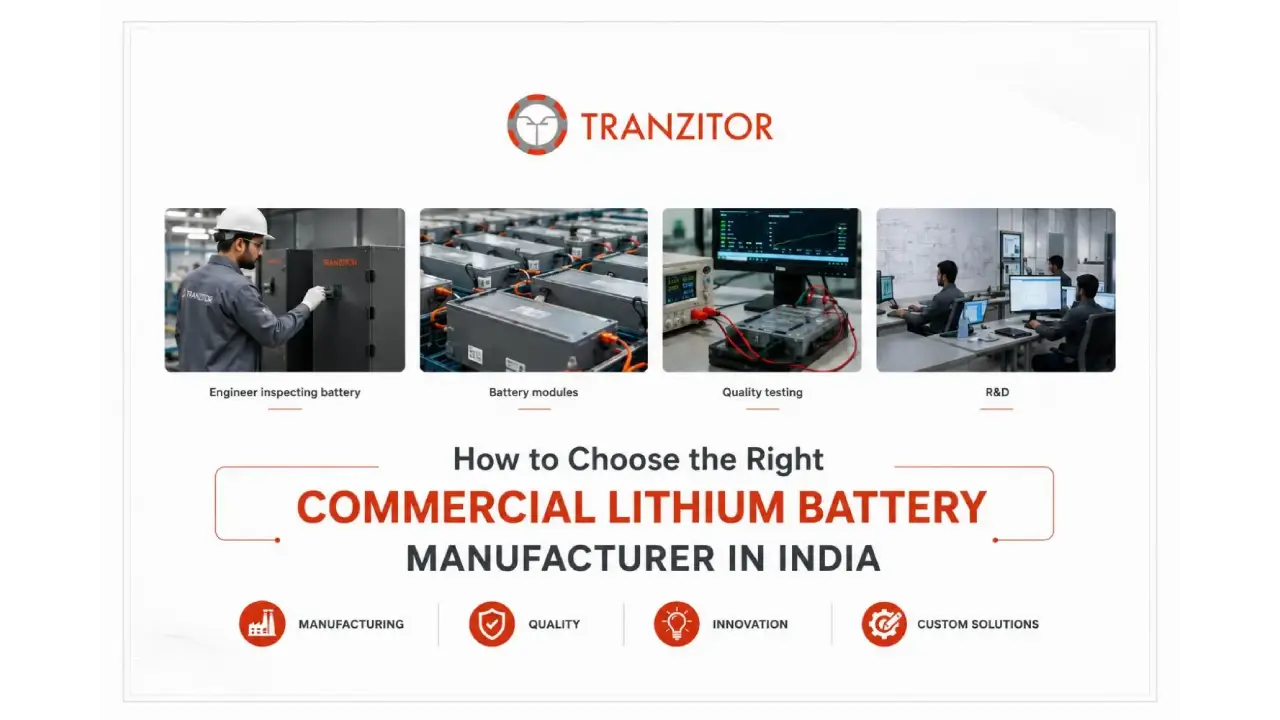
How to Choose the Right Commercial Lithium Battery Manufacturer in India
India’s demand for lithium battery solutions is growing rapidly across industries such as renewable energy, telecom, industrial automation, electric mobility, and Battery Energy Storage Systems (BESS). As a result, hundreds of suppliers now claim to offer high-performance lithium batteries, but not every manufacturer delivers the same level of quality, engineering expertise, or long-term reliability.
For businesses, choosing the wrong supplier can lead to performance issues, increased maintenance costs, project delays, and unexpected failures.
So, how do you identify a reliable commercial lithium battery manufacturer in India?
This guide outlines the most important factors every procurement manager, EPC contractor, OEM, and industrial buyer should consider before making a decision.
Why Choosing the Right Manufacturer Matters:
A lithium battery is a long-term investment.
Its reliability depends not only on the battery cells but also on engineering design, manufacturing quality, Battery Management System (BMS), testing procedures, and after-sales support.
The right manufacturing partner helps you achieve:
- Higher operational efficiency
- Longer battery lifespan
- Lower maintenance costs
- Improved system safety
- Reliable technical support
- Better return on investment
1. Manufacturing Capability
The first question to ask is simple:
Does the company actually manufacture batteries or simply assemble imported components?
A genuine lithium battery manufacturer should have dedicated infrastructure for:
- Cell testing and matching
- Battery module assembly
- BMS integration
- Electrical integration
- Quality testing
- Final inspection
A manufacturer with in-house capabilities can maintain better quality control and provide customised battery solutions.
2. Engineering & R&D Expertise
Every application has different energy requirements.
A battery designed for a telecom tower differs significantly from one used in industrial UPS systems or commercial solar installations.
Look for manufacturers with an active Research & Development team capable of designing:
- Custom battery packs
- High-voltage battery systems
- Battery Energy Storage Systems (BESS)
- OEM battery solutions
- Application-specific battery configurations
Strong engineering support ensures your battery is designed for your exact operating conditions, not adapted from a generic product.
3. Battery Chemistry
Not all lithium batteries use the same chemistry.
For commercial and industrial applications, LiFePO₄ (Lithium Iron Phosphate) has become one of the most preferred choices due to its:
- Excellent thermal stability
- Long cycle life
- High safety
- Low maintenance
- Reliable performance
Before selecting a manufacturer, understand which battery chemistry best suits your application and verify their expertise with that technology.
4. Battery Management System (BMS)
The Battery Management System is the intelligence behind every lithium battery pack.
A quality BMS protects the battery by monitoring:
- Voltage
- Temperature
- Current
- State of Charge (SOC)
- State of Health (SOH)
It also safeguards against:
- Overcharging
- Deep discharge
- Overcurrent
- Short circuits
- Overheating
For industrial projects, look for communication protocols such as CAN and RS485 to ensure compatibility with inverters and energy management systems.
5. Manufacturing Quality & Testing
One of the clearest indicators of a reliable manufacturer is the testing process.
Ask whether every battery undergoes:
- Capacity testing
- Charge-discharge cycle testing
- Insulation testing
- BMS validation
- Communication testing
- Visual inspection
- Final quality approval
Rigorous testing helps ensure every battery performs consistently in real-world operating conditions.
6. Certifications & Compliance
Commercial battery projects often require compliance with recognised quality and safety standards.
Depending on the application, ask about certifications such as:
- BIS
- IEC
- CE
- RoHS
- UN38.3
- ISO Quality Management Systems
These certifications demonstrate a commitment to quality, product safety, and regulatory compliance.
7. Customisation Capabilities
Every project has unique requirements.
Whether you’re building a solar energy storage system, industrial UPS solution, telecom backup system, or electric mobility application, your battery should match your operational needs.
Evaluate whether the manufacturer can customise:
- Voltage
- Capacity
- Enclosure
- BMS programming
- Communication interfaces
- Mounting options
- Rack configurations
Custom engineering often delivers better performance than adapting standard products.
8. Industry Experience
Experience matters.
Manufacturers serving multiple industries have a better understanding of diverse operational environments.
Ask about previous experience in:
- Renewable energy
- Telecom
- Manufacturing
- Commercial buildings
- Battery Energy Storage Systems (BESS)
- Industrial automation
A proven track record provides greater confidence in long-term product performance.
9. Technical Support & After-Sales Service
The relationship shouldn’t end after delivery.
A dependable manufacturer should provide:
- Installation guidance
- Technical documentation
- Remote support
- Warranty assistance
- Maintenance recommendations
- Troubleshooting support
Reliable after-sales service helps maximise battery performance throughout its lifecycle.
10. Total Cost of Ownership (Not Just Purchase Price)
The lowest purchase price isn’t always the best value.
A battery with:
- Better engineering
- Higher-quality cells
- Advanced BMS
- Longer cycle life
- Lower maintenance
Often delivers a significantly lower total cost of ownership over its lifetime.
When evaluating suppliers, consider operational costs, not just the initial quotation.
Quick Supplier Evaluation Checklist:
Evaluation Criteria | Why It Matters |
Manufacturing Facility | Ensures production quality |
Engineering & R&D | Supports custom solutions |
LiFePO₄ Expertise | Improves safety and lifespan |
Advanced BMS | Protects battery performance |
Quality Testing | Reduces failure risk |
Certifications | Demonstrates compliance |
Customisation | Meets application requirements |
Industry Experience | Builds confidence |
Technical Support | Ensures long-term reliability |
Warranty | Protects your investment |
Why Businesses Partner with Tranzitor:
At Tranzitor, we combine engineering expertise, advanced manufacturing capabilities, and rigorous quality assurance to develop lithium battery solutions for industrial and commercial applications.
From custom lithium battery packs and high-voltage battery systems to LiFePO₄ inverter batteries and Battery Energy Storage Systems (BESS), every solution is designed to deliver reliable performance, enhanced safety, and long-term value.
With a strong focus on quality, innovation, and customer support, we work closely with OEMs, EPC contractors, system integrators, and businesses to develop battery solutions tailored to their operational requirements.
FAQ
1. How do I choose the best lithium battery manufacturer in India?
Look for manufacturing capabilities, engineering expertise, quality testing, certifications, customisation options, and reliable after-sales support.
2. Why is LiFePO₄ preferred for commercial applications?
LiFePO₄ batteries offer excellent safety, long cycle life, thermal stability, and low maintenance, making them ideal for industrial and commercial use.
3. What certifications should a lithium battery manufacturer have?
Common certifications include BIS, IEC, CE, RoHS, UN38.3, and ISO quality management certifications, depending on the product and application.
4. Can lithium battery packs be customised?
Yes. Many manufacturers offer customised voltage, capacity, enclosure, BMS programming, communication protocols, and rack configurations based on application requirements.
5. Why is a Battery Management System (BMS) important?
A BMS monitors battery health and protects against overcharging, overheating, short circuits, and deep discharge, ensuring safe and efficient operation.