Sizing High-Voltage BESS: How Systems Over 384V Minimise Cabling Losses and Thermal Output
In the utility-scale and industrial commercial sectors, sizing a Battery Energy Storage System (BESS) goes far beyond simply multiplying nominal cell capacities. When an EPC contractor or solar system integrator attempts to scale traditional 48V architectures into the hundreds of kilowatt-hours (kWh) for factory peak shaving or microgrid support, they run into a severe, unavoidable physical bottleneck: electrical current.
Pushing massive amounts of power at low voltages requires pushing astronomical amounts of current. High current mandates impractically thick, expensive copper cabling. Worse, it bleeds a massive percentage of your stored energy as pure thermal waste before it ever reaches the inverter.
To achieve maximum Round-trip efficiency (RTE) and aggressively lower the Levelized Cost of Storage (LCOS), modern industrial facilities must pivot to an HV lithium battery architecture. By scaling systems to 384V, 600V, or even 800V DC, a verified lithium battery manufacturer can fundamentally alter the physics of power delivery.
Here is the exact engineering breakdown of why high-voltage lithium battery pack configurations vastly outperform legacy low-voltage systems.
The Physics of Efficiency: Joule’s Law in BESS Engineering
The justification for high-voltage energy storage rests entirely on two foundational equations of electrical physics: the Power Equation and Joule’s First Law.
1. The Power Equation
Power, measured in Watts, is the product of Voltage and Current. The formula is written as:
$$P = V \times I$$
If an industrial facility requires a steady power output of 100 kW (100,000 Watts), the battery system must deliver exactly that power, regardless of its internal architecture.
- If you use a standard 48V BESS, the current required is: 100,000 / 48 = 2,083 Amps.
- If you upgrade to a Tranzitor 384V HV lithium battery rack, the current required plummets: 100,000 / 384 = 260 Amps.
2. Joule’s Law (Thermal Power Loss)
This massive drop in current is critical because of Joule’s Law. This law dictates how much energy is lost as thermal waste when electrical current passes through the inherent physical resistance of your cables, busbars, and internal hardware connections.
$$P_{\text{loss}} = I^2 \times R$$
Because current ($I$) is squared in this equation, any reduction in current yields an exponential reduction in thermal power loss. In the example above, scaling the system from 48V to 384V reduces the current by a factor of exactly 8. Consequently, the thermal cabling losses are reduced by a factor of 64.
A 384V system generates 64 times less heat in its wiring than a 48V system pushing the same amount of power. To see how this impacts physical infrastructure, look at how efficiency changes when calculating I2R losses across a fixed cable/busbar line resistance of 2.0 mOhms:
|
System Architecture |
Required Current |
Thermal Cabling Waste |
Engineering Result |
|
Option A: 48V Storage |
2,083.3 Amps |
8,680.6 Watts |
Massive cable heat, thick copper requirements, high cooling costs. |
|
Option B: 384V Stack |
260.4 Amps |
135.6 Watts |
Low heat footprint, thin cables, max system round-trip efficiency. |
|
Option C: 600V Grid Rack |
166.6 Amps |
55.5 Watts |
Peak thermal performance, seamless DC inverter coupling. |
The Compounding Costs of Low-Voltage Inefficiency: When you waste over 8,000 Watts of energy as pure heat (as seen in the 48V example above), you trigger a cascading failure of economic and structural inefficiencies across the entire project lifecycle.
3. Copper Cabling and Installation Costs
In a 48V system pushing thousands of amps, procurement teams are forced to specify massive, ultra-thick DC power cables—often 120 sq mm or even 400 sq mm cross-sections—just to prevent the copper from melting under the load. Heavy-gauge copper is notoriously expensive. It is also incredibly rigid, making cable routing and termination inside battery cabinets a labour-intensive nightmare for installation crews.
By utilising a custom lithium battery pack configured for 384V or 600V, the low current allows integrators to utilise much thinner, highly flexible cabling. This instantly slashes the Bill of Materials (BOM) cost for copper and dramatically reduces on-site installation labour hours.
4. Thermal Management and HVAC Overload
Battery cells degrade rapidly under heat. If the internal busbars and cables are constantly generating I2R heat, the ambient temperature inside the battery enclosure spikes rapidly.
To counteract this, the system’s HVAC or active liquid-cooling mechanisms must work overtime. These cooling systems draw “parasitic power” directly from the battery itself, further reducing the amount of usable energy delivered to your facility. An HV lithium battery naturally runs cooler because it minimises internal electrical friction. This drastically lowers the burden on your cooling system and protects the internal LiFePO4 cells from premature thermal capacity degradation.
5. DC-Coupling and Inverter Efficiency
Most commercial solar PV strings operate at high DC voltages (commonly 600V to 1,000V). If a facility uses a 48V lithium inverter battery, the hybrid power conversion system (PCS) must aggressively step down the high PV voltage to charge the low-voltage battery, and then step it back up to 415V AC to feed the three-phase facility grid.
Every single voltage conversion step incurs a 2% to 4% efficiency penalty. By aligning the BESS voltage closer to the solar string voltage and the utility grid voltage (e.g., 384V or 600V), you achieve highly efficient DC-coupling. The power flows directly into the battery with minimal conversion friction, resulting in a significantly higher RTE for the entire solar-plus-storage station.
Safety and BMS Intelligence in High-Voltage Racks
While high voltage solves the current and thermal bottlenecks, it introduces a strict requirement for advanced internal safety mechanisms. You cannot treat a 384V BESS the same way you treat a residential 48V battery.
Stacking lithium cells in series to achieve hundreds of volts requires an enterprise-grade BMS (Battery Management System). At these voltages, active cell balancing is critical. If one cell inside a 384V stack drifts in voltage, it can bottleneck the entire megawatt array.
Furthermore, industrial BESS architectures require robust pre-charge circuits and heavy-duty high-voltage contactors. If a system integrator connects a 384V battery pack directly to a large capacitive load (like an industrial inverter) without a pre-charge sequence, the resulting inrush current can instantly weld the contactors together or cause catastrophic hardware failure. A properly engineered high-voltage BMS actively manages this handshake, slowly pre-charging the inverter’s capacitors before fully closing the main circuit.
BESS Sizing: The Tranzitor HV Architecture
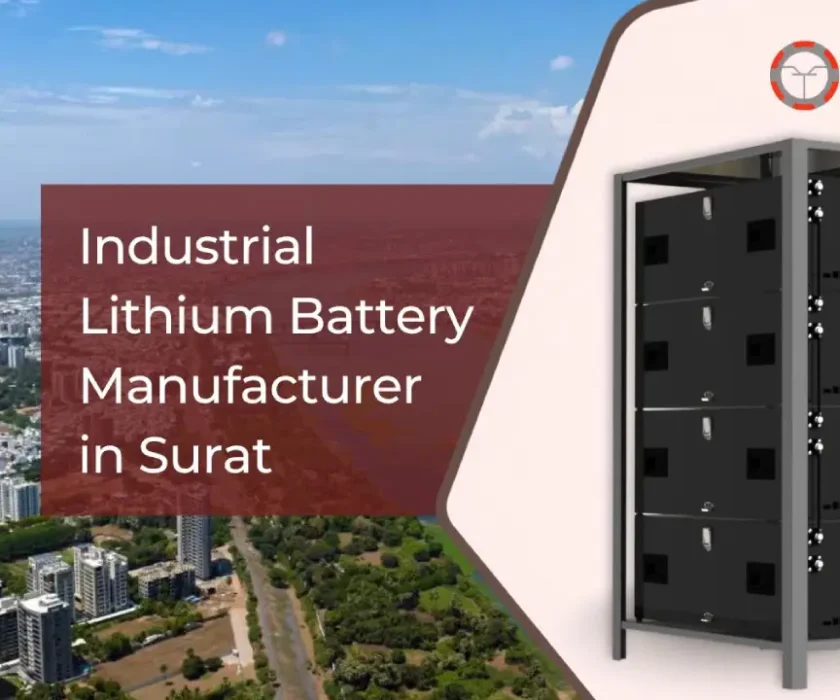
At Tranzitor Private Limited, we engineer high-voltage battery packs explicitly designed to eliminate industrial scaling bottlenecks. Rather than forcing clients to parallel dozens of low-voltage modules, creating a spaghetti-web of thick, hot copper cables—our high-voltage BESS racks are designed around streamlined, series-connected architecture.
A standard Tranzitor 384V 100Ah Grid BESS rack provides 38.4 kWh of highly stable, thermally efficient usable energy. Because the cells are stacked in series, our integrated BMS handles high-precision active cell balancing across the entire high-voltage gradient, resulting in pinpoint SOC tracking and flawless communication with leading commercial inverters.
When you partner with a trusted lithium battery manufacturer capable of engineering true high-voltage systems, you aren’t just buying energy storage capacity. You are buying the thermodynamic efficiency required to make grid-scale energy storage financially viable over a 15-year lifecycle.